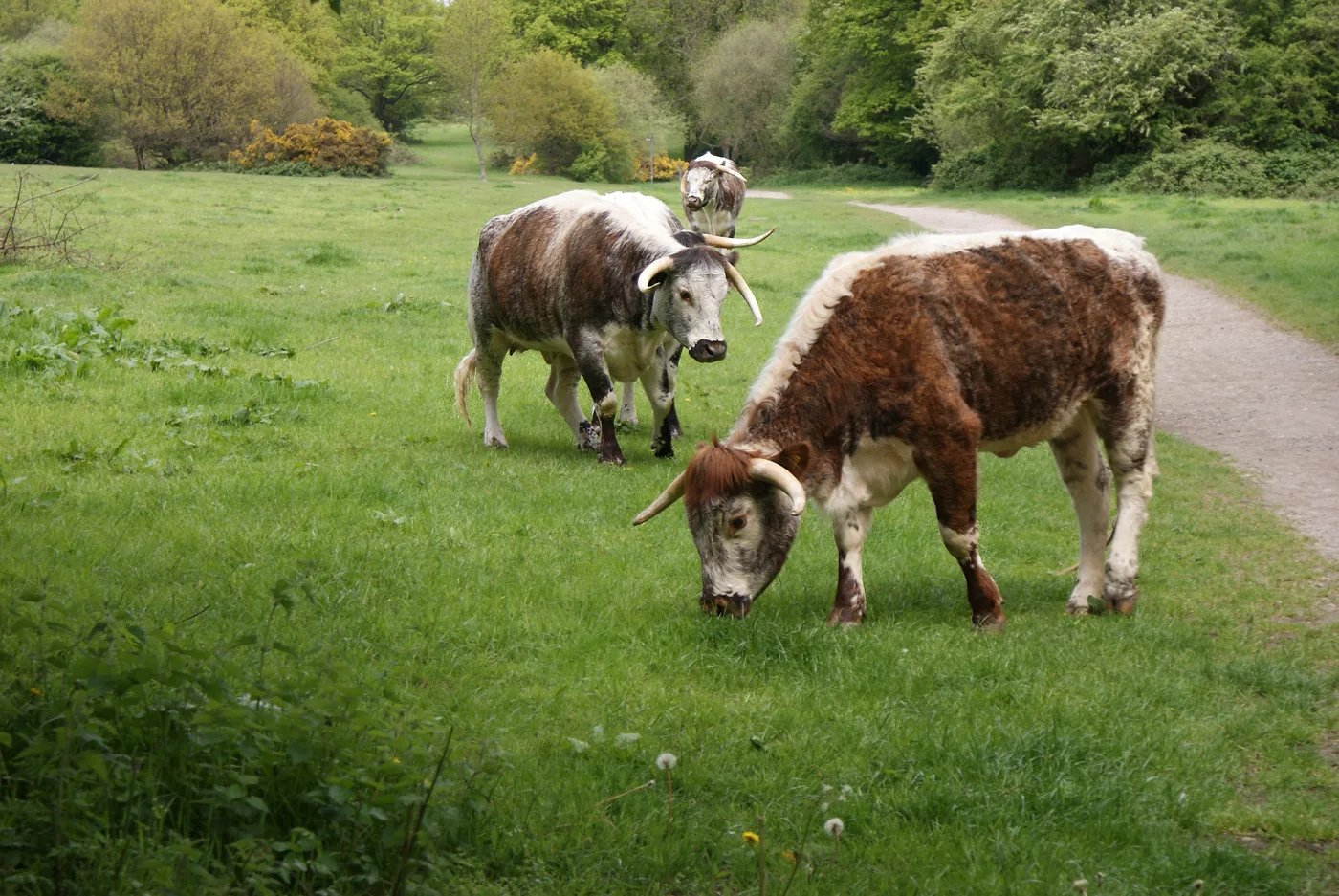

18 longhorn steers return to Formby's Ravenmeols dunes from mid-October and graze until April 2027. What dog walkers should do if they meet them.
Longhorn cattle are coming back to the dunes at Formby for the winter. The National Trust says 18 cattle will start arriving from mid-October and graze until April 2027 (National Trust, conservation work at Formby).
They belong to Lancashire Wildlife Trust, which runs the grazing with the National Trust. This is the second winter. Last autumn and winter a trial herd grazed the Ravenmeols dune grasslands, south of Devil’s Hole, and the Trust says the herd will now be welcomed back each winter.
Why cattle are on the dunes
Grazing keeps the open dune grassland from turning into dense scrub. The National Trust says the cattle help to:
- keep invasive plants in check
- protect the natural balance of the dunes
- support wildflowers, insects and ground-nesting birds, and the rare wildlife that depends on open dunes
Albert Peacock, a National Trust ranger at Formby, said after the first season that “in just a short time, they have already opened up areas of the dune grasslands” (Lancashire Wildlife Trust, 25 February 2026).
The herd spends summer on Wildlife Trust reserves such as Brockholes and Lunt Meadows. It moves to the coast when those sites get too wet, because the sand hills stay dry enough underfoot. The Wildlife Trust says its longhorns also winter on Sefton Council’s Ainsdale and Birkdale Sandhills nature reserve.
No fences: how the herd is kept in
There are no new fences on the dunes. Each animal wears a GPS collar from Nofence. The collar plays a sound as the animal nears a virtual boundary. If it keeps going, it gets a mild electric pulse, which the National Trust says is much weaker than a traditional electric fence.
The Trust has mapped the whole area the cattle can use this winter. They will not have all of it at once. They are moved between smaller sections over the season.
The herd is all steers, which are castrated males. There are no bulls, no pregnant cows and no calves.
What it means for you
You can still walk where the cattle are grazing. The National Trust asks visitors to:
- keep your distance from the herd
- put your dog on a short lead when cattle are about 100 metres away or closer
- if cattle come towards you, drop the lead and walk away calmly
- follow the rules in Sefton’s coastal Public Space Protection Order
The National Trust’s page links a map of this winter’s grazing area. Look at it before a walk at Ravenmeols, and keep dogs close from mid-October until April.
Have your say